Knee Overview
Continue reading about the knee and causes of pain in this region by scrolling down on this page!
About Knee Pain
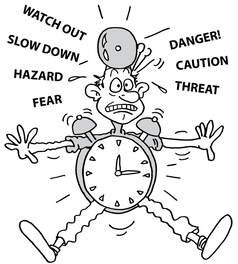
More than 60% of people report knee pain at some point during their adult life. Generalized knee pain is the 3rd most common reason Americans visit their doctor each year. Since the knee only moves in one plane, the position of the hip and ankle have a profound effect on the forces that meet at the knee. If motion is lacking above or below the knee, the abnormal forces dispersed on the knee will result in pain. There are many reasons why knee pains happens so a simple starting point is understanding your bodies alarm system.
Most people think pain is an indicator of the amount of tissue injury present in the body. The belief is that a high amount of pain equates to a large or serious injury, and a small amount of pain equates to a small injury. However, through extensive research, it’s been shown in many cases that surprisingly, pain has little correlation to the amount of tissue damage present. For example, a paper cut may cause intense pain, while a broken bone may go unnoticed. How is this possible?
Pain is more like an alarm system. It’s a naturally built, evolution-provided system designed to keep you out of danger. At the center of the alarm system is your brain, which sounds the alarm when it makes the decision based on all available information that something is wrong or potentially dangerous. If the system is healthy, it warns you when something is wrong, just as your home alarm sounds when a burglar breaks a window or your car alarm sounds if a thief tries to break in.
Following an injury to the knee (and after clearance from a medical professional), it is important to gradually resume activity. Restoring range of motion and strength will decease the sensitivity of the alarm and allow for communication between the brain and knee to return to normal!
Most people think pain is an indicator of the amount of tissue injury present in the body. The belief is that a high amount of pain equates to a large or serious injury, and a small amount of pain equates to a small injury. However, through extensive research, it’s been shown in many cases that surprisingly, pain has little correlation to the amount of tissue damage present. For example, a paper cut may cause intense pain, while a broken bone may go unnoticed. How is this possible?
Pain is more like an alarm system. It’s a naturally built, evolution-provided system designed to keep you out of danger. At the center of the alarm system is your brain, which sounds the alarm when it makes the decision based on all available information that something is wrong or potentially dangerous. If the system is healthy, it warns you when something is wrong, just as your home alarm sounds when a burglar breaks a window or your car alarm sounds if a thief tries to break in.
Following an injury to the knee (and after clearance from a medical professional), it is important to gradually resume activity. Restoring range of motion and strength will decease the sensitivity of the alarm and allow for communication between the brain and knee to return to normal!
|
What is IT Band Syndrome?
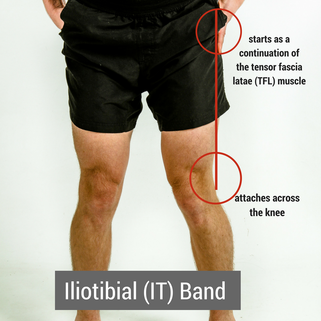
The IT band (iliotibial band) runs along the outer leg and travels from the hip to the knee. The problem is often called IT Band Syndrome, but this does not give us any information why it occurs. Most people self treat with foam rollers and other soft tissue work on this area with little relief. Why are they unsuccessful? They are not addressing the CAUSE of the problem, but only treating a single impairment.
When does IT Band tightness typically occur?Tightness along the outer leg is commonly felt after running, doing squats, going up stairs.
Why does IT Band tightness occur?
|
Knee Facts, Misconceptions, and Tips
|
|